

A stadium may host one game, but that game is experienced through four very different perspectives.
The athlete is reading movement.
The official is judging moments.
The camera is capturing every frame.
The spectator is following the complete story.
Each audience has a different visual requirement. And the lighting must meet all four—simultaneously.
That is what makes sports lighting fundamentally different from conventional outdoor illumination.
For athletes, visibility directly affects performance.
They must track fast-moving objects, understand the position of teammates and opponents, judge distances and react within fractions of a second. Uneven illumination, distracting glare or deep shadows can interfere with these decisions.
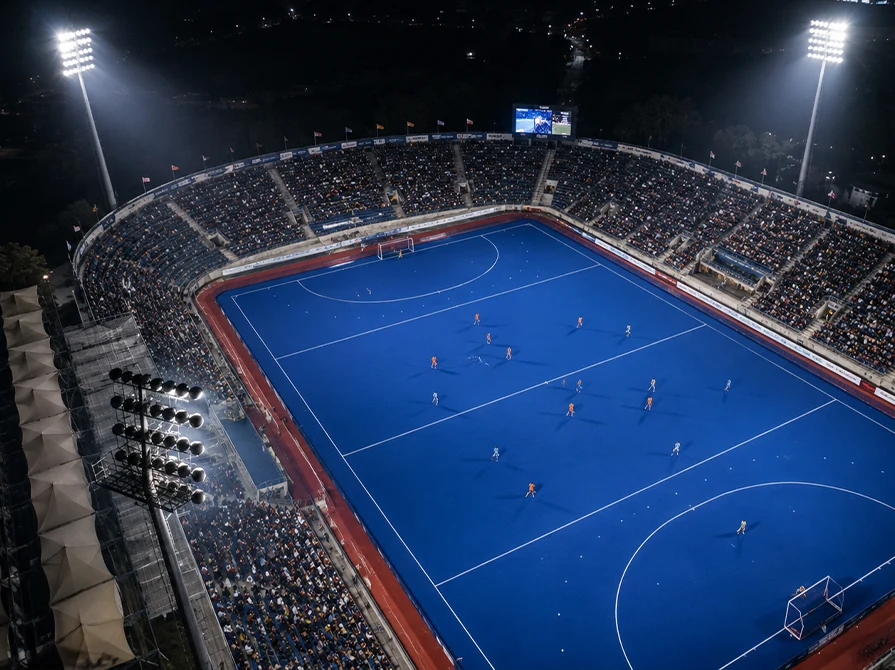
A well-designed system creates consistent visibility across the entire field of play. It helps athletes move naturally, stay focused and perform without constantly adjusting to changing brightness levels.
The objective is not simply to make the field brighter. It is to make every movement easier to read.
An umpire or referee may have only a moment to make a decision.
Was the ball inside the line? Did contact happen before the whistle? Did the player cross the boundary?
These decisions depend on visual clarity from different positions and viewing angles. Lighting must minimise dark patches, harsh contrasts and glare that could obscure a critical moment.
For officials, good illumination supports confidence and accuracy—especially when the margin between the right and wrong call is almost invisible.
A broadcast camera experiences light differently from the human eye.
Lighting that looks stable in person may appear to flicker during slow-motion playback. Inconsistent colour or inadequate vertical illumination can affect how clearly players, faces and objects are captured.
Modern broadcasts therefore require lighting designed around flicker performance, colour rendering, exposure and high-speed camera requirements.
Every frame must remain clear—from the wide stadium shot to the closest replay.
Because today, the sporting experience is not limited to the people inside the venue. It reaches millions through screens.
Spectators need to follow the game comfortably from different seating levels and distances.
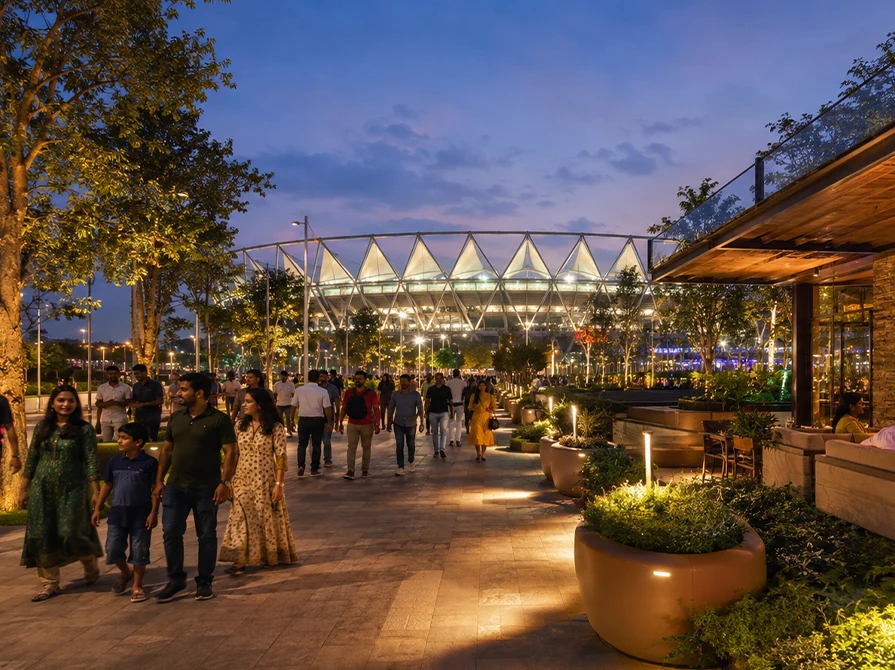
But their experience begins before they take their seats. Entrances, concourses, stairways, hospitality areas and exits must also remain clearly and safely illuminated.
A complete sports-lighting plan therefore extends beyond the playing surface. It considers the entire journey through the venue.
Meeting these four expectations requires more than installing powerful floodlights.
The lighting plan must consider the sport, venue size, mounting height, beam angles, luminaire placement, camera positions, competition level and environmental conditions.
Smart controls can further support different operating modes for training, competition, broadcast, maintenance and non-sporting events—delivering the required illumination without using the same output for every situation.
Wipro Lighting’s sports-lighting solutions are designed around this complete approach, with options for high-efficiency performance, precise beam control, durable construction, high colour rendering, flicker-free operation and intelligent control.
Because a stadium does not have one audience.
It has four.
And when the lighting serves each one effectively, the game becomes clearer, fairer, more engaging and easier to remember.