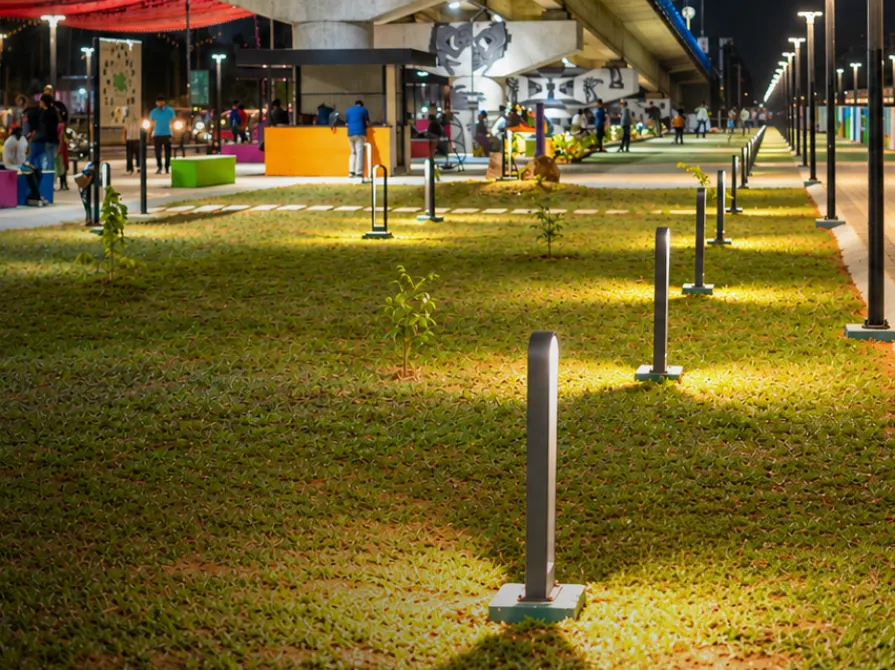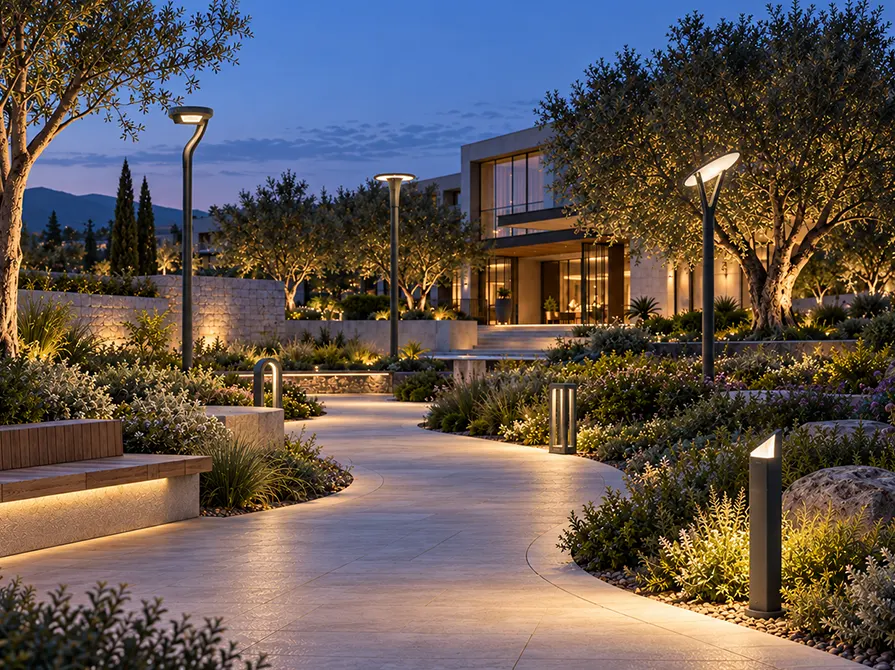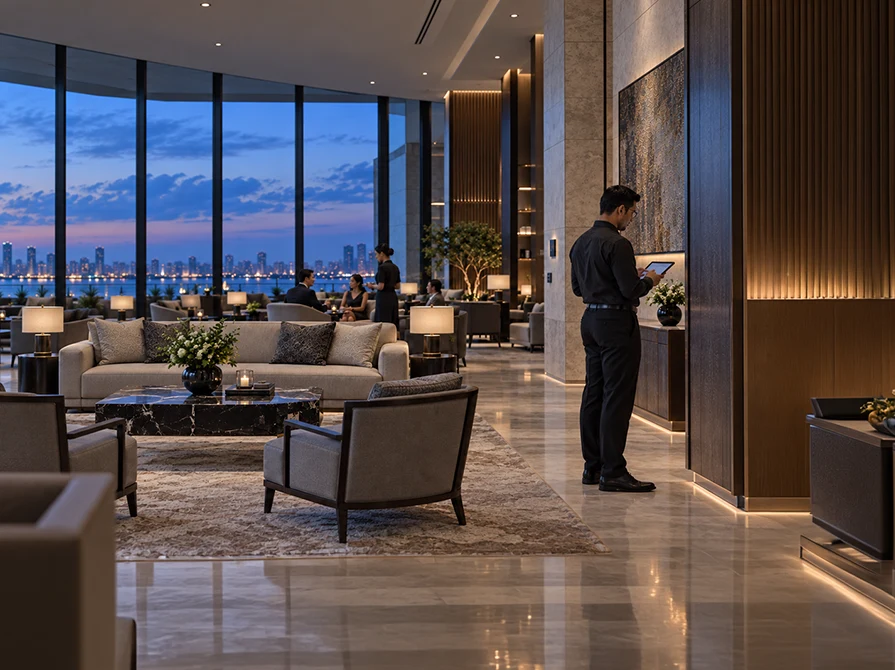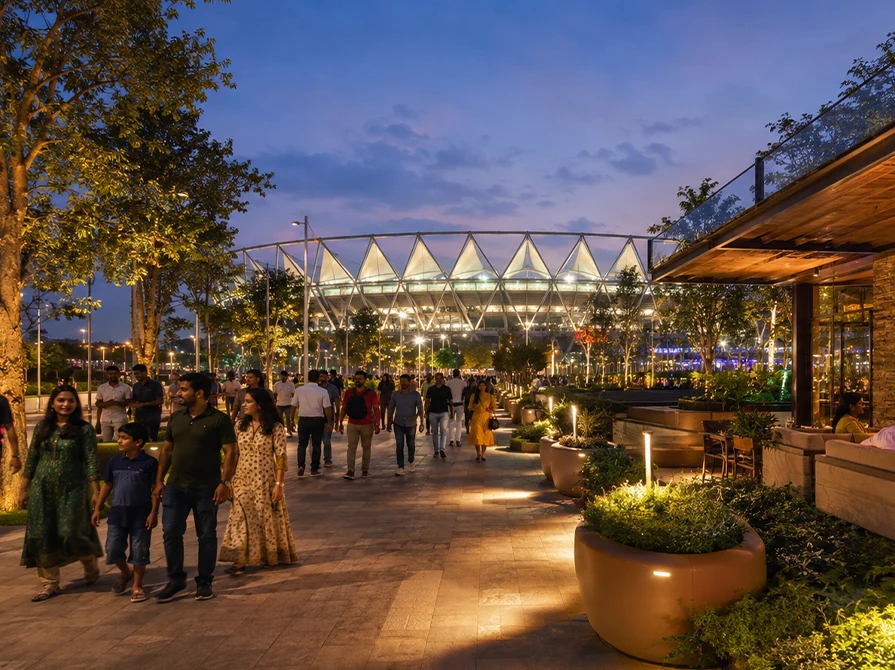


A destination is rarely a single experience.
It may begin at the entrance of a hotel, move through a lobby and restaurant, continue into a garden or promenade, open onto a public plaza and eventually arrive at a landmark that defines the skyline.
Each space has a different purpose. A different scale. A different atmosphere.
So why should they all look the same after dark?
One of the more interesting challenges in destination lighting is creating coherence without uniformity.
A cohesive lighting vision does not necessarily mean repeating the same colour temperature, brightness, luminaire form or visual treatment everywhere. In fact, doing so can flatten the very character that makes individual spaces worth experiencing.
The stronger approach is to establish relationships between them.
At a destination scale, lighting begins to work almost like a visual language.
Some elements announce arrival.
Some encourage movement.
Some create intimacy.
Some invite people to pause.
Some help architecture become a point of orientation.
And some spaces deliberately remain quieter so that something else can command attention.
This hierarchy matters.
A softly illuminated garden can make an adjoining restaurant feel warmer. A restrained promenade can allow a monument ahead to become visually dominant. A building façade can act as a distant orientation point without every space leading towards it needing to compete for attention.
The experience becomes connected not because everything has been treated identically, but because every element understands its role within the larger composition.
Destination lighting is also defined by what is not illuminated.
Contrast allows material to emerge. Shadow gives planting depth. Lower visual intensity can create intimacy, while carefully controlled emphasis can turn a piece of architecture into a memorable moment.
Used deliberately, darkness is not an absence of design. It is one of its tools.
The question therefore moves beyond “How much light does this space need?”
It becomes:
What should people notice here? What should recede? Where should the eye travel next?
This is where breadth becomes valuable.
A destination may require hospitality lighting, architectural illumination, landscape luminaires, optical distributions and intelligent controls - but these should not exist as isolated layers.
They need to support the larger design intent while giving each environment enough freedom to remain itself.
Wipro Lighting works alongside architects, lighting consultants and designers across these different layers, bringing together application expertise, optics, controls and a wide portfolio of solutions to help translate one larger vision into multiple distinct experiences.
Because the strongest destination lighting does not make every space look alike.
It allows every space to speak in its own voice - while making sure they all belong to the same story.