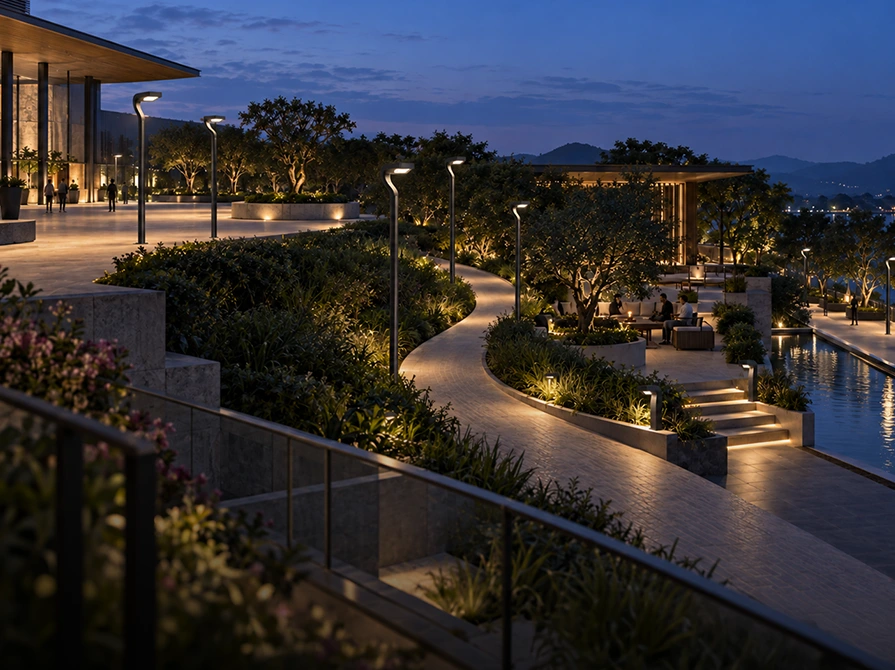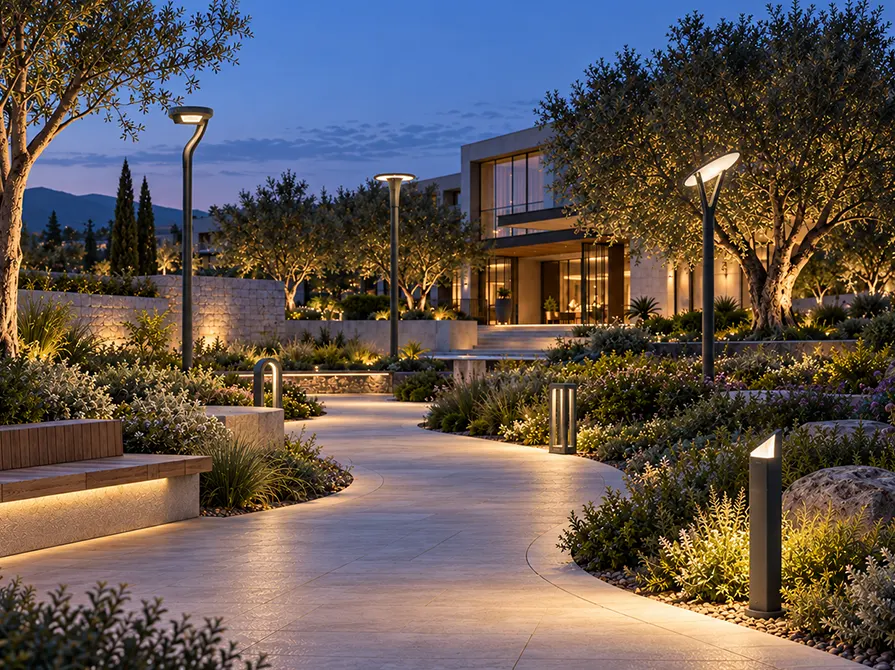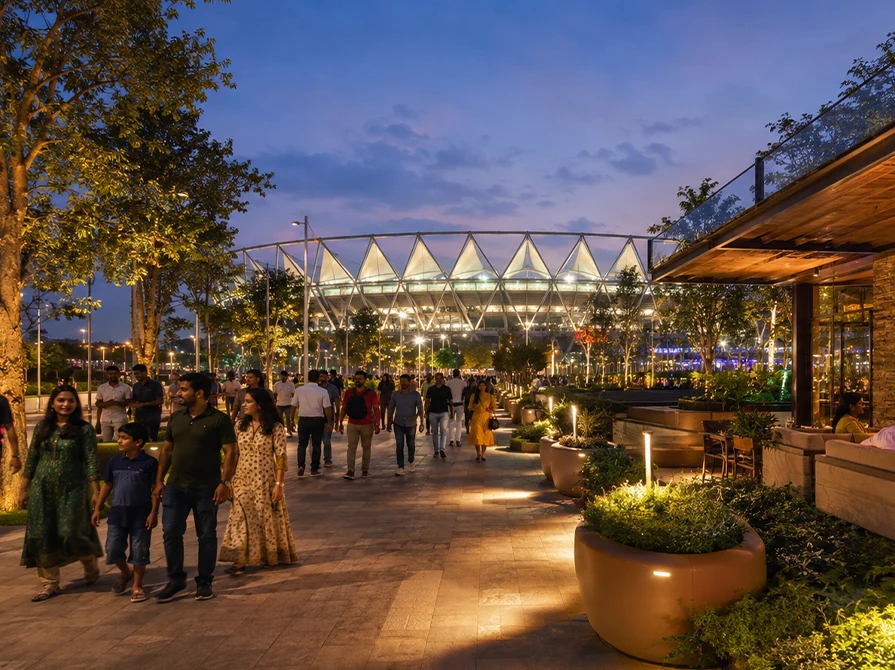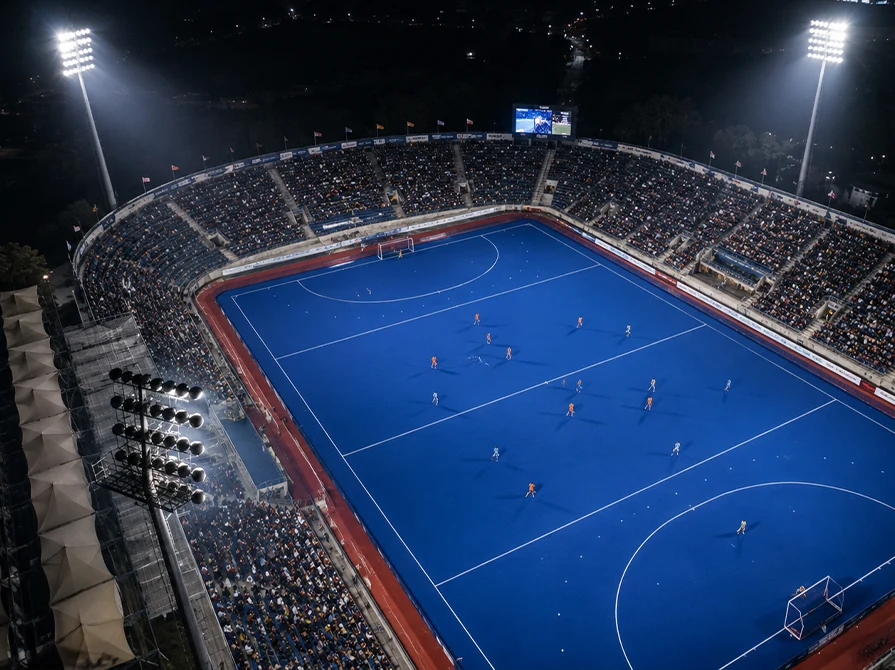


A hospitality lighting concept can be resolved down to the luminaire, distribution, control intent and scene strategy. Yet there is still a critical distance between what is documented and what the guest ultimately experiences.
That distance is closed during commissioning.
For architects and lighting consultants, this is where a carefully developed lighting language is translated into actual scene values, grouping logic, sensor behaviour, schedules and transitions - within a space that now contains the real materials, furniture, artwork and operating conditions it was designed around.
The specification establishes the intent. Commissioning helps preserve it.
A restaurant’s evening state is more than a predetermined dimming percentage. Its final character depends on how different lighting layers sit against the completed material palette, how daylight withdraws from the space, and how smoothly the transition occurs.
The same applies across guestrooms, banquet spaces, lounges and circulation areas. Once the project is operational, multiple variables begin acting simultaneously.
Wipro’s iSense ecosystem gives project teams a connected platform for configuring and commissioning these relationships. Devices can be grouped, scenes created and invoked, schedules defined, and occupancy and daylight sensors associated with the relevant lighting. The system also enables mobile control and integration with Building Management Systems.
This gives the lighting consultant more than automation capability. It provides a means of carrying the intended behaviour of the space into its everyday operation.
Hospitality projects rarely operate in a single state.
An event space may move from preparation to conference to celebration. An all-day dining environment may need several distinct conditions between breakfast and late evening. Occupancy patterns fluctuate. Available daylight changes continuously.
iSense allows those variations to sit within one control architecture rather than becoming disconnected interventions. Scene control, scheduling, occupancy sensing and daylight harvesting can work together while still allowing manual intervention where required.
Its analytical layer adds another dimension after handover, with visibility into energy utilisation, occupancy, device usage and emergency monitoring.
This is where Wipro Lighting’s role extends beyond supplying the luminaires specified on the drawings.
By bringing lighting solutions and intelligent controls into the same conversation, Wipro can work alongside architects, lighting consultants and hospitality teams through the transition from concept to commissioned environment.
The architect defines the atmosphere.
The lighting consultant resolves how it should behave.
Wipro helps provide the technology and application support to carry that intent into operation.
Because in hospitality, the final percentage of the lighting process can determine whether a carefully designed scene simply exists on paper - or is experienced exactly as it was imagined.