

When we talk about light pollution, we often begin with the stars.
We talk about the loss of the night sky, the orange glow above cities, and the fact that more than 80% of the world’s population lives under light-polluted skies. The Milky Way is now hidden from more than one-third of humanity. (ref. - science.org)
But light pollution is not only an astronomical problem.
It is an ecological one.
For countless species, darkness is not empty space. It is a signal. It tells insects when to move, feed and reproduce. It helps migratory birds orient themselves across long journeys. It guides sea turtle hatchlings toward the ocean. It allows nocturnal animals to hunt, hide, rest and survive.
Artificial light at night changes these signals.
Research on nocturnal insects shows that artificial light can affect movement, foraging, reproduction, communication and predator-prey behaviour. (ref. - pmc.ncbi.nim.nih.gov)
One study on night-time pollination found that artificial lighting reduced visits by nocturnal pollinators by 62%, showing how a lighting decision can ripple into plant life and food systems.
Migratory birds are also affected. Artificial lights can draw birds off their natural routes, causing exhaustion and increasing the risk of collisions with buildings, especially during migration seasons. Sea turtle hatchlings face a similar problem on lit coastlines, where artificial lights can pull them away from the ocean instead of toward it.
The issue is not that cities need darkness everywhere.
Cities need light. Roads need visibility. Public spaces need safety. Pedestrians need confidence. Urban life depends on good lighting after sunset.
The issue is light without restraint.
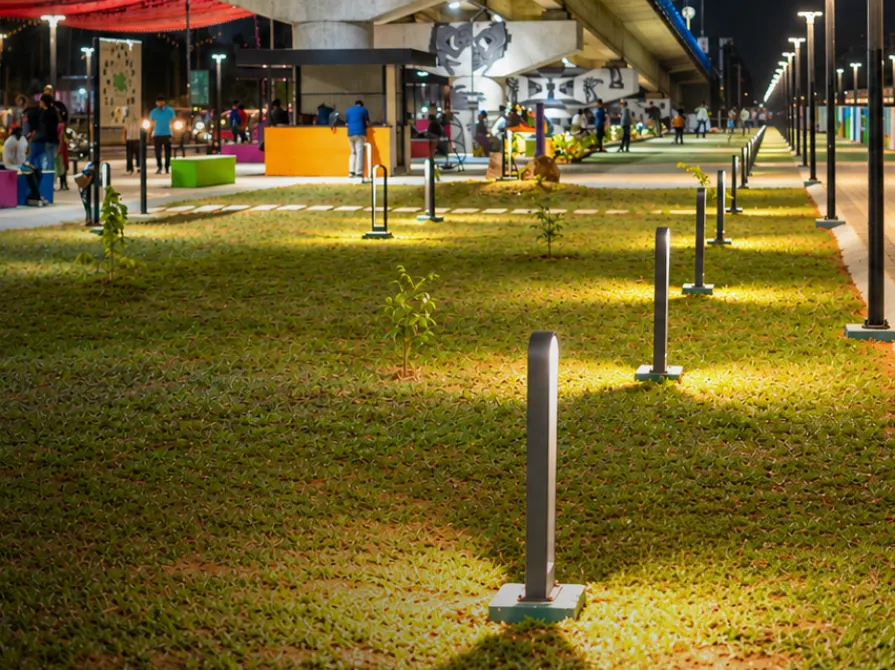
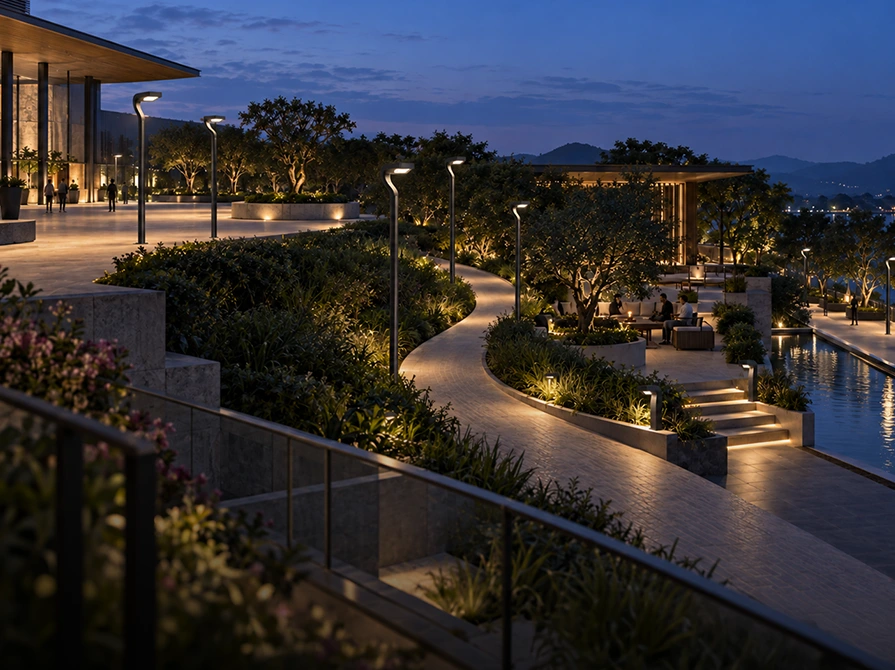
Light that spills upward serves no one. Light that enters homes affects rest. Light that floods trees, water bodies and habitat edges creates ecological disturbance. Light that is too bright, too cool or too constant can make the night hostile for the life that depends on it.
Responsible lighting changes this.
DarkSky’s five principles define outdoor lighting as useful, targeted, low level, controlled and warm-coloured - a framework that helps reduce light pollution, save energy and minimise wildlife disruption. (ref. - darksky.org)
This is the thinking behind Wipro Lighting’s approach that aligns with DarkSky norms.
For architects, urban planners, developers and city officials, lighting is now more than an infrastructure choice. It is an environmental decision.
Every street, park, pathway, campus, waterfront, township and public plaza offers an opportunity to protect both human experience and the natural night.
The future of responsible lighting will not be defined by the brightest cities.
It will be defined by the cities that understand where light belongs - and where darkness must remain.
Through our Darksky certified luminaires, Wipro is committed towards co-creating spaces that respect people, cities and nature.