
Exceptional outdoor spaces create memorable first impressions long before guests enter a building. For hotels, resorts, corporate campuses, educational institutions, and premium mixed-use developments, a thoughtful landscape lighting design transforms gardens, pathways, architectural features, and gathering spaces into inviting environments that remain vibrant after sunset. Every lighting decision shapes the visitor experience, enhances navigation, celebrates architecture, and supports operational efficiency.
This guide is created for architects, hospitality designers, landscape consultants, lighting professionals, and project managers. It explores the core principles of landscape lighting design, explains the importance of layered illumination, highlights fixture selection strategies, and shares practical design considerations tailored to Indian commercial landscapes and climatic conditions.
Landscape lighting plays a vital role in creating outdoor environments that feel welcoming, functional, and visually engaging. Beyond illumination, it contributes to the identity of a property and enriches the overall experience for guests, employees, residents, and visitors.
For hotels and resorts, lighting becomes an extension of the brand experience. Beautifully illuminated gardens, arrival courts, water features, and outdoor dining spaces create memorable moments that guests associate with comfort, elegance, and hospitality. Evening ambience also encourages greater use of restaurants, lounges, terraces, and event lawns, supporting hospitality operations throughout the day.
Corporate campuses benefit from landscape lighting that enhances wayfinding, improves pedestrian comfort, and creates an inspiring workplace environment. Well-lit pathways, plazas, and landscaped courtyards encourage movement across the campus while contributing to employee wellbeing through thoughtfully designed outdoor spaces.
One of the most important principles of successful landscape lighting design is layering. A layered lighting approach combines different types of illumination to create comfortable, visually rich outdoor environments.
Ambient lighting provides overall visibility across pathways, plazas, and gathering areas. Task lighting supports activities such as walking, dining, or vehicle movement. Accent lighting highlights architectural details, sculptures, trees, water features, and landscape elements.
Together, these layers create depth, visual balance, and flexibility. Visitors naturally experience the landscape as a sequence of illuminated spaces rather than a uniformly bright environment. Layering also helps establish atmosphere while supporting practical functionality across different outdoor zones.
Lighting guides the eye just as architecture guides movement.
Visual hierarchy helps designers determine which elements deserve the greatest emphasis. Arrival courts, entrances, signature trees, water features, sculptures, and architectural façades often become focal points that define the identity of the property.
By creating a hierarchy of brightness and focal points, designers help visitors intuitively understand the landscape. This approach improves orientation, strengthens architectural composition, and creates memorable nighttime experiences.
Beautiful landscape lighting depends as much on shadow as it does on illumination.
Carefully balanced contrast reveals texture, depth, and form across trees, planting beds, stone walls, and architectural surfaces. Instead of evenly illuminating every element, designers use selective lighting to create visual rhythm throughout the landscape.
Soft shadows introduce movement and character while allowing highlighted elements to stand out naturally. Mature trees appear more sculptural, textured façades gain richness, and gardens develop greater depth after sunset.
Warm white lighting around 3000K creates a relaxed and luxurious ambience, making it a popular choice for hotel landscape lighting, resorts, outdoor dining spaces, gardens, and hospitality environments.
Neutral white lighting around 4000K provides greater visual clarity and works especially well for corporate campuses, educational institutions, parking areas, and circulation routes.
A consistent colour temperature strategy across related zones creates visual harmony throughout the property. Designers often establish separate lighting palettes for hospitality spaces and functional circulation areas while maintaining smooth visual transitions between them.
Well-designed fixtures direct light precisely toward intended surfaces while reducing unnecessary upward light. Shielded optics, recessed light sources, and appropriate cutoff angles improve viewing comfort for pedestrians and drivers alike.
Thoughtful glare control also enhances architectural appreciation by allowing illuminated elements to remain the visual focus rather than the light source itself.
Many commercial developments also incorporate Dark Sky principles that encourage responsible outdoor lighting, reduce light spill, improve energy efficiency, and preserve the nighttime environment. These practices contribute to sustainable lighting strategies while delivering a refined visual experience.
Every outdoor area serves a different purpose. Successful landscape lighting responds to these unique functional and aesthetic requirements.
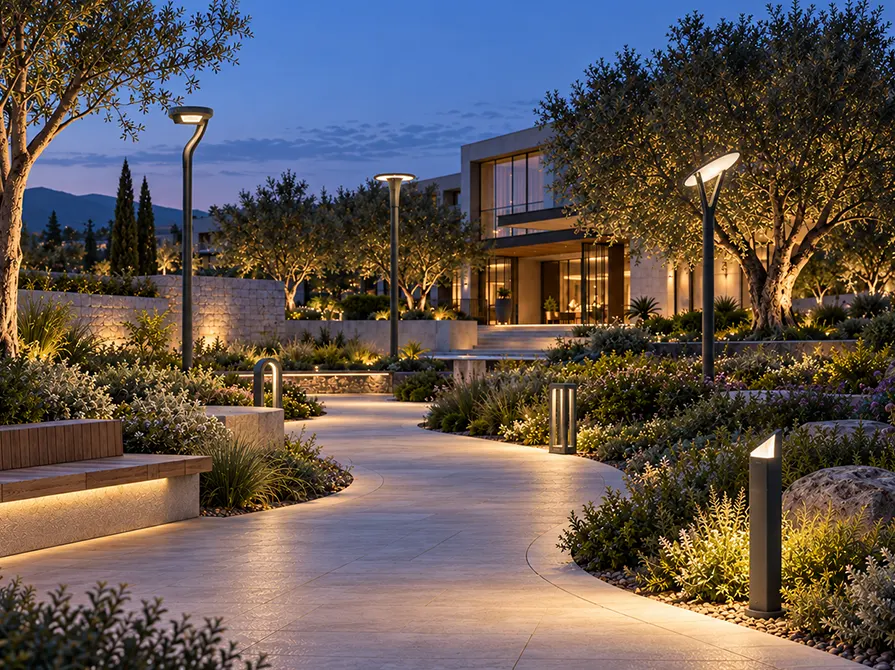
The arrival experience introduces visitors to the property's identity. Bollard lighting, architectural uplighting, and carefully positioned flood lighting help define vehicle circulation while highlighting key landscape elements. Feature trees and signature planting create strong visual anchors that establish a premium first impression.
Entrances benefit from layered lighting that combines architectural illumination, canopy lighting, decorative fixtures, and accent lighting. Clear visibility supports smooth arrivals while elegant lighting reinforces the character of the building.
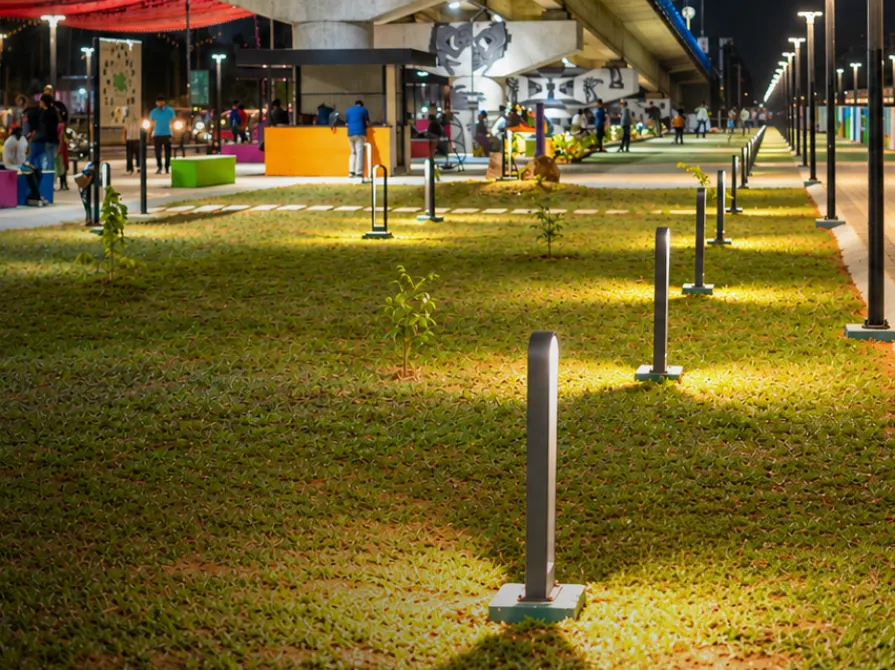
Pedestrian routes require uniform, comfortable illumination that supports intuitive movement across the site. Path lights and bollards provide guidance while maintaining visual continuity throughout the landscape. Consistent spacing and appropriate brightness create pleasant walking experiences.
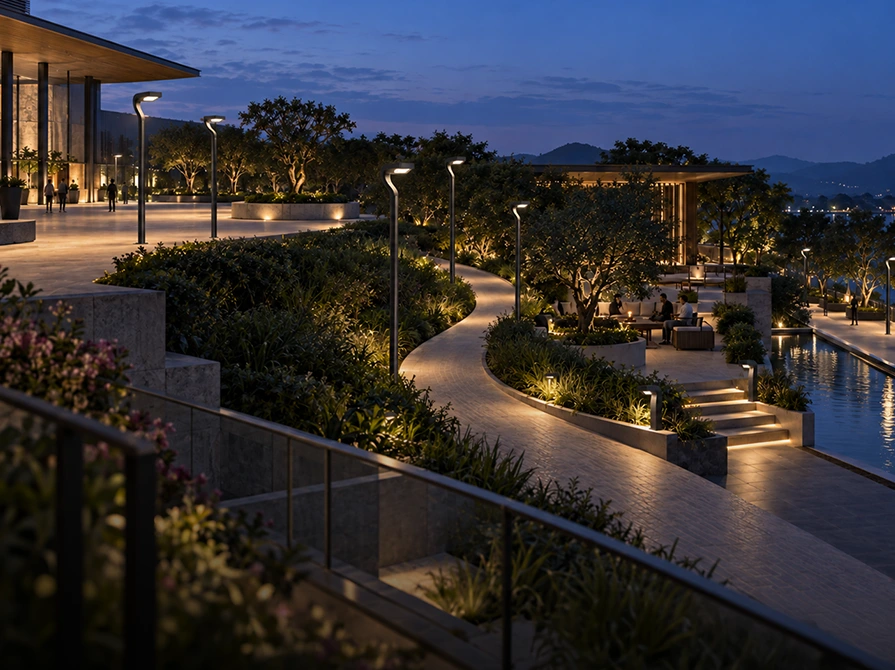
Gardens become immersive nighttime environments through selective accent lighting. Mature trees, ornamental shrubs, textured planting, and landscape sculptures gain depth through carefully positioned spotlights and in-ground uplights. Layered lighting reveals the beauty of natural materials while preserving a tranquil atmosphere.
Pools, fountains, reflecting pools, and waterfalls become captivating focal points after sunset through integrated underwater lighting. Reflections add movement and visual richness while complementing surrounding architectural lighting.
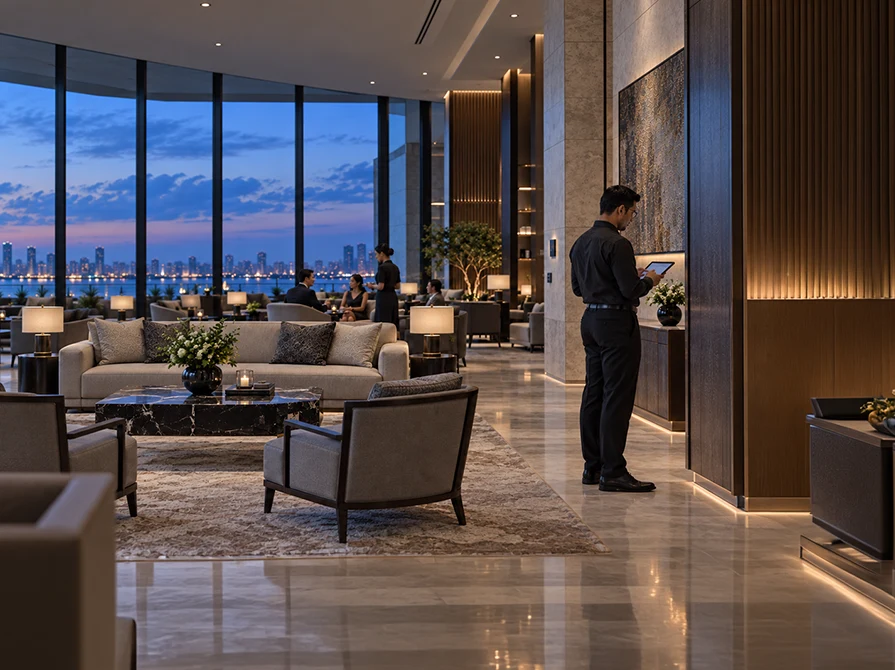
Hospitality spaces benefit from warm ambient lighting that encourages relaxation and social interaction. Decorative pendants, festoon lighting, concealed linear fixtures, and subtle landscape accents create inviting environments suitable for dining, celebrations, and outdoor events. Flexible scene settings allow the atmosphere to adapt throughout the evening.
Thoughtful planning during the design stage supports long-term performance, visual consistency, and efficient maintenance.
A balanced lighting approach creates comfortable outdoor environments while showcasing landscape features with elegance. Appropriate fixture spacing and carefully selected lumen levels help maintain visual harmony across the site.
Indian commercial projects experience diverse environmental conditions that include monsoon rainfall, high temperatures, humidity, dust, and coastal exposure. Selecting suitable IP-rated fixtures supports reliable performance across changing seasons. IP65 serves many outdoor applications, while IP66 and higher ratings offer additional protection in demanding environments.
Establishing a coordinated colour temperature palette across the property strengthens architectural identity and creates a seamless visual experience. A well-planned lighting strategy enhances continuity between hospitality areas, circulation routes, and landscaped zones.
Lighting layouts that consider maintenance access contribute to efficient long-term operations. Accessible fixture placement, service-friendly mounting systems, and organised cable routing simplify inspection and routine servicing while helping maintain consistent lighting performance.
Scene control, scheduling, and dimming systems provide flexibility for different operational requirements throughout the day. Dynamic lighting settings support hospitality events, seasonal celebrations, and everyday operations while contributing to energy optimisation.
Modern commercial landscapes increasingly incorporate intelligent lighting systems that improve operational efficiency while enhancing user experience.
Protocols such as DALI and KNX allow centralised control of large lighting installations across hotels, resorts, campuses, and mixed-use developments. Facility teams can manage multiple outdoor zones through a unified control platform.
Astronomical timers automatically adjust switching schedules according to sunrise and sunset throughout the year, ensuring lighting remains aligned with seasonal daylight patterns.
Dusk-to-dawn sensors further streamline operations by responding to changing ambient light levels, while app-based scene control enables quick adjustments for events, festivals, private functions, and everyday use.
A detailed Request for Quotation (RFQ) helps ensure consistency during product evaluation and procurement. Including clear technical specifications also supports easier comparison between fixture options.
A typical commercial landscape lighting checklist should include:
How do you design landscape lighting for a hotel?
Hotel landscape lighting combines ambient, task, and accent lighting to create welcoming arrival experiences, comfortable pedestrian circulation, attractive gardens, inviting outdoor dining spaces, and visually engaging architectural features. A layered design approach delivers both functionality and ambience.
What is layered landscape lighting?
Layered landscape lighting combines ambient lighting for overall visibility, task lighting for specific activities, and accent lighting that highlights landscape features, architecture, and focal points. Together, these layers create depth, visual interest, and comfortable outdoor environments.
What colour temperature works best for resort landscape lighting?
Warm white lighting around 3000K creates a comfortable and elegant atmosphere for gardens, pathways, courtyards, pools, and outdoor hospitality spaces. Neutral white lighting around 4000K works well in operational and circulation areas where greater visual clarity adds value.
How much does landscape lighting cost for a commercial property in India?
Project costs vary according to property size, lighting objectives, fixture selection, control systems, installation complexity, and design requirements. A professional lighting plan provides the most accurate project estimate while ensuring optimal performance and long-term value.
An effective landscape lighting design brings together architecture, nature, technology, and human experience to create outdoor spaces that remain welcoming throughout the evening. From elegant hotel gardens and luxury resorts to corporate campuses and public landscapes, thoughtful lighting design enhances aesthetics, supports navigation, and contributes to operational efficiency.
Explore Wipro Lighting's outdoor lighting portfolio, architectural lighting solutions, smart lighting controls, and project case studies to discover solutions tailored for Indian commercial environments.
Planning a new hospitality or campus project? Get in touch with the Wipro Lighting landscape lighting team and collaborate on a customised lighting strategy that delivers beauty, performance, and long-term value.