

Wipro Lighting has spent three decades answering one question before any other: what does the human in this space actually need? Not what the fixture can do. Not what the specification sheet promises. What the person working, healing, moving, or living in that space requires to perform their task safely, comfortably, and without unnecessary strain.
This is what "Innovation for Human Spaces" means. Technology that serves human needs first. Design that disappears into the background of a well-designed life.
Most commercial lighting discussions begin with lumens and wattage. These matter - but only as answers to questions that start with people. A hospital corridor at 3 AM has different requirements than the same corridor at 10 AM because the people in it have changed. Night-shift nurses need enough light to move safely and read medication labels without disturbing patients trying to sleep. The solution is intelligent zoning: task lighting at nursing stations, soft ambient lighting in patient-adjacent areas, motion-activated guidance in corridors.
A textile worker spends eight hours inspecting fabric for defects under artificial light. Poor color rendering means defects go undetected until the fabric reaches the buyer. High CRI lighting is not a luxury specification - it is the difference between catching a flaw in minute three or catching it never.
In India, electricity costs and availability directly impact whether a business survives. Energy efficiency is operational necessity, not environmental theatre. But treating it as a trade-off against human comfort is a false choice LED technology solved a decade ago.
Tunable white technology adjusts color temperature throughout the day - cooler light during morning hours for alertness, warmer light during evening shifts to reduce circadian disruption. Occupancy sensors prevent waste in empty spaces. Daylight harvesting reduces artificial output when natural light is sufficient - not just to save energy, but because people prefer working where daylight participates.
Lighting designed for European or American spaces often fails in India. Not because the technology is inferior - because the context is different. Indian workspaces contend with higher ambient temperatures, variable power supply, dust ingress, and longer operating hours.
Wipro Lighting's 30 years in India means these considerations are built into the design process, not discovered during installation. Fixtures are tested against actual environmental conditions. Thermal management is engineered for inconsistent HVAC. Lumen maintenance curves are calculated based on real-world operating temperatures, not lab conditions. The technician replacing a failed fixture at 2 AM is a person whose night was disrupted. Designing for these realities is what human-centric design requires.
Sports lighting must allow athletes to track a ball at 140 km/h while giving spectators clear sightlines and delivering flicker-free coverage for broadcast cameras. Wipro's solutions account for horizontal and vertical illuminance with anti-glare technology that protects vision during high-stakes moments.
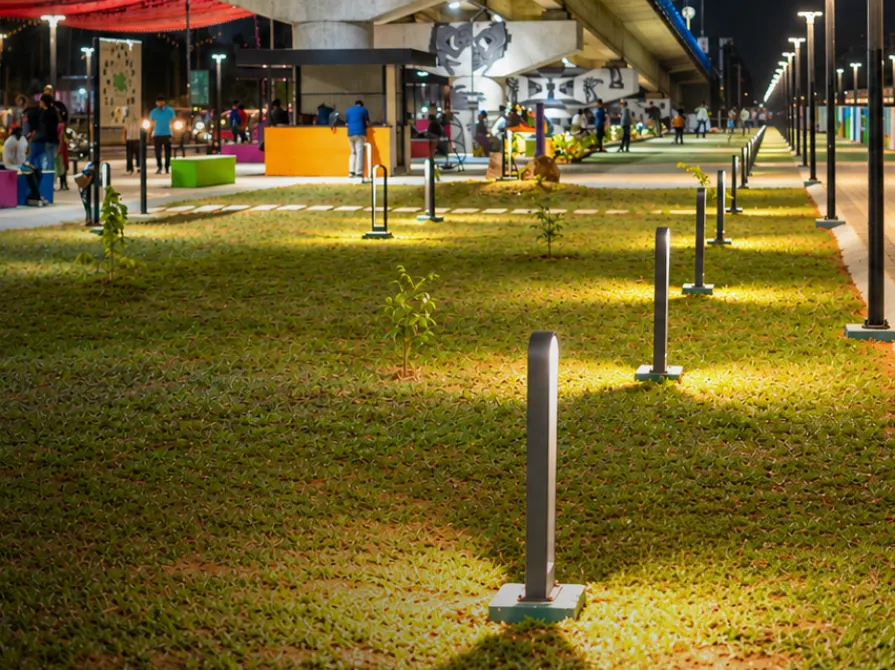
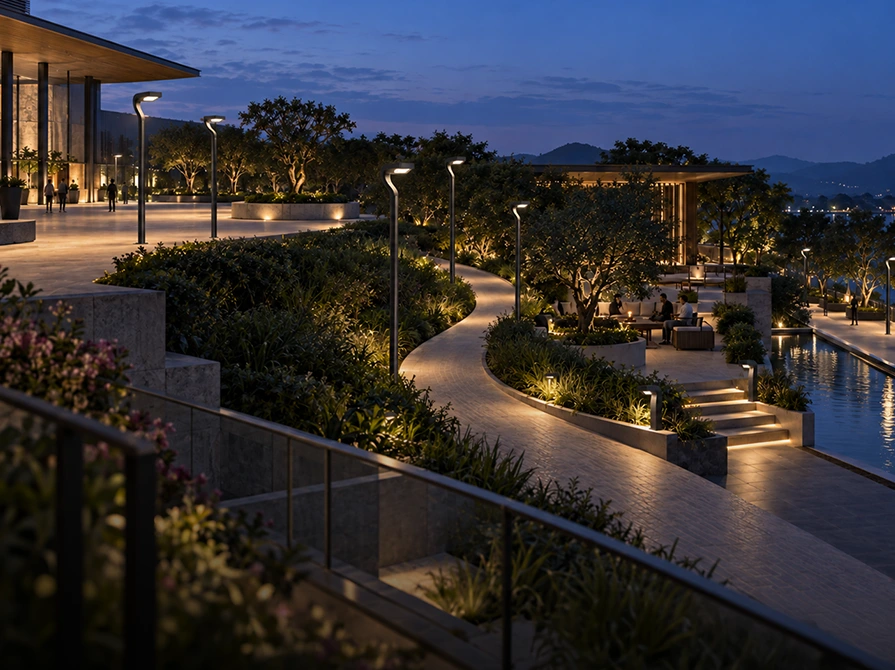
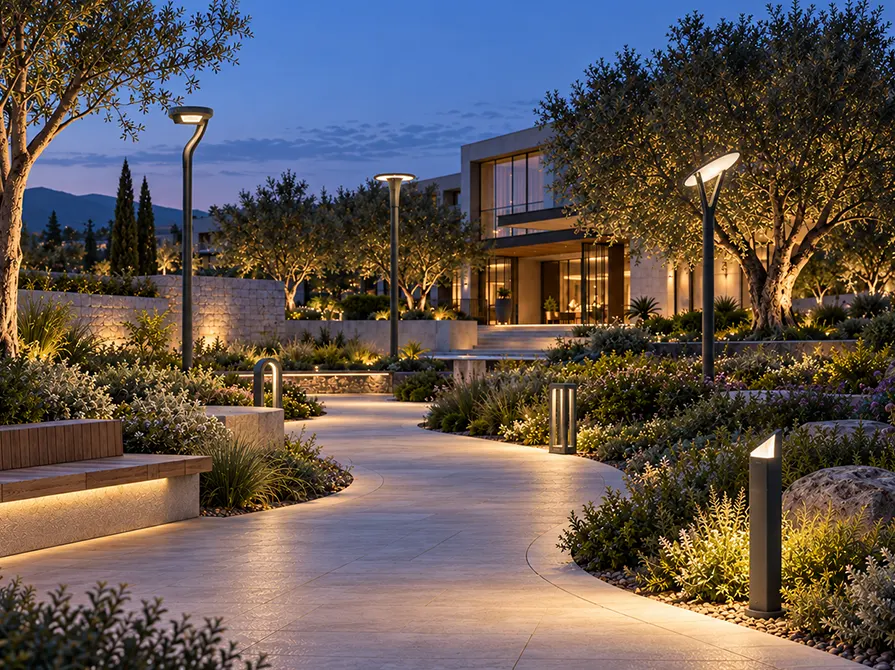
Facade lighting for heritage monuments and corporate headquarters must reveal architectural texture without flattening detail or overwhelming the structure. Wipro's facade solutions use precise beam control and color rendering that preserves material authenticity, with programmable systems that adapt for events and seasons.
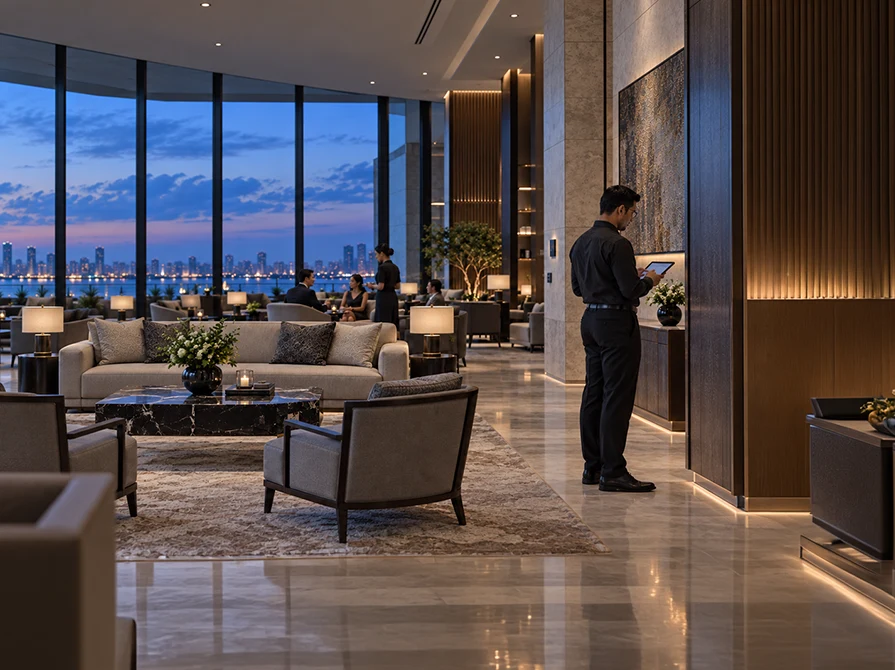
It means architects can specify Wipro Lighting and trust that products have been tested against real-world India conditions. It means facility managers receive fixtures that install predictably and operate reliably. It means workers, patients, and commuters move through spaces where lighting supports their task without announcing itself.
Thirty years of asking "what does the human need?" before "what can this technology do?" That is why "Innovation for Human Spaces" is not a tagline at Wipro Lighting - it is the filter every design decision passes through before it becomes a product.