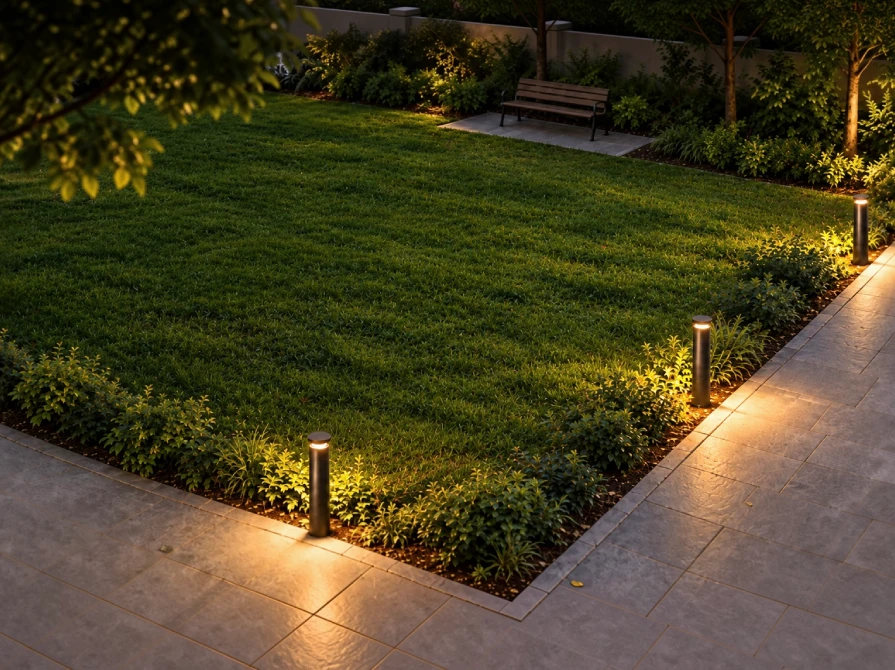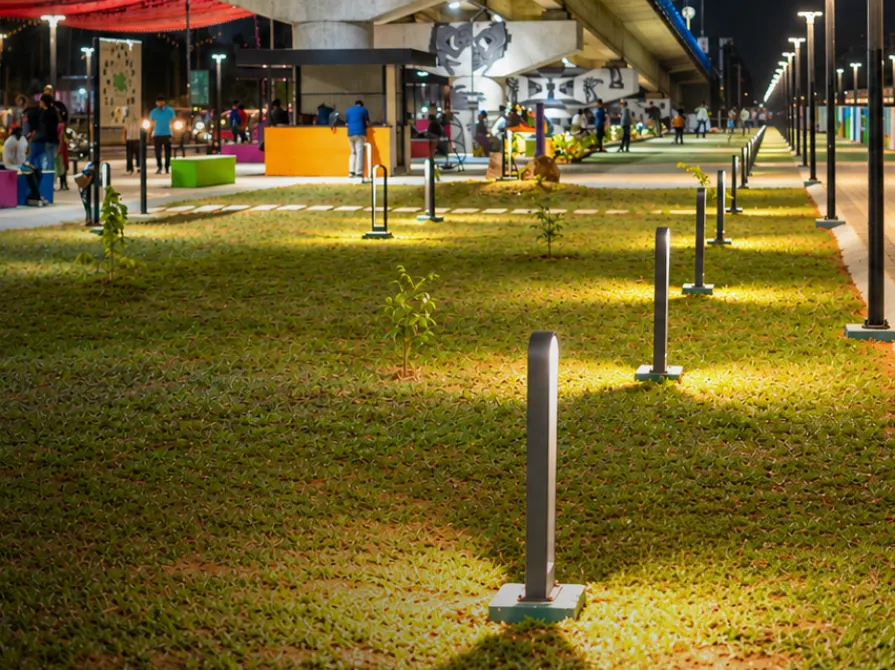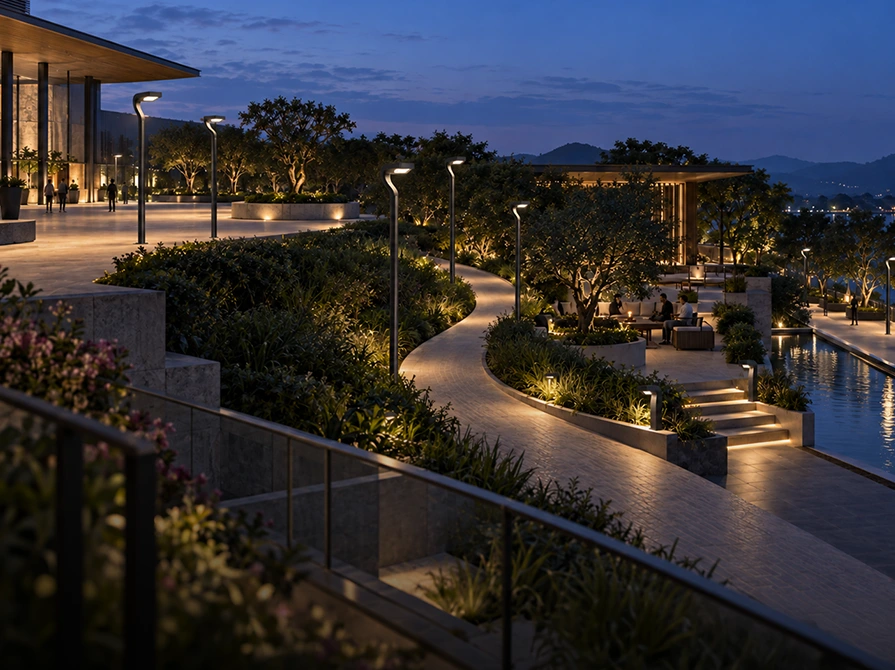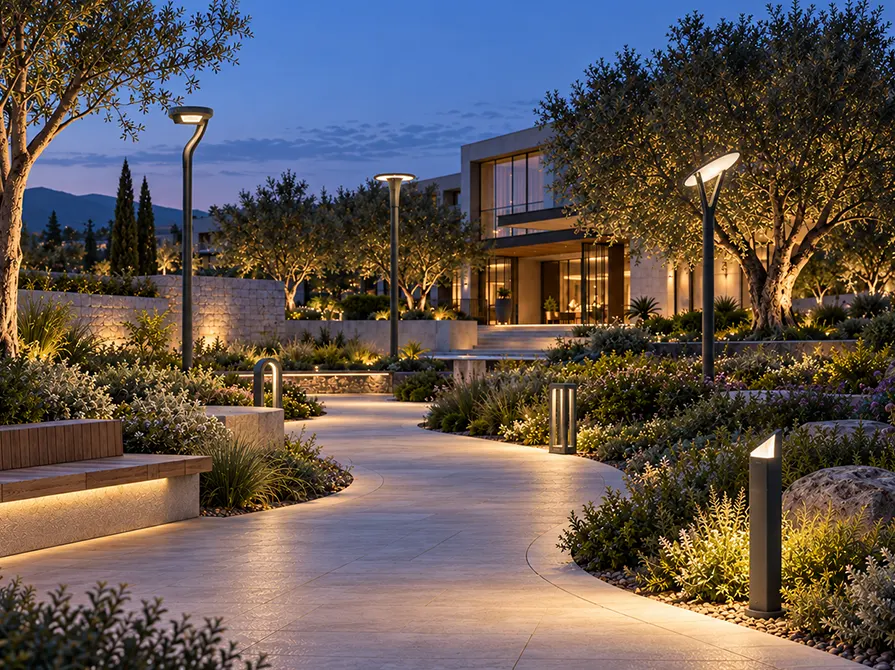


Outdoor lighting is undergoing a quiet yet powerful transformation. As cities expand, landscapes evolve, and sustainability becomes integral to design decisions, lighting is no longer treated as an afterthought. It is increasingly viewed as a strategic design element that influences safety, aesthetics, energy performance, and the overall experience of outdoor spaces. At the heart of this shift lies the convergence of smart solar systems and architectural design. Together, they are redefining how outdoor environments are illuminated, creating spaces that feel intelligent, elegant, and environmentally responsible.
Traditional outdoor lighting focused primarily on visibility and coverage. Today, expectations are far more layered. Outdoor lighting is expected to complement architecture, respect natural surroundings, respond to user behavior, and align with sustainability goals.
Solar-powered lighting systems have emerged as a natural fit for this evolution. With advancements in photovoltaic technology, battery storage, and LED efficiency, solar lighting now offers consistent performance, design flexibility, and long-term reliability. When combined with smart controls and architectural intent, these systems elevate outdoor lighting from utility to experience.
Smart solar lighting systems operate at the intersection of renewable energy and digital intelligence. They capture solar energy during the day, store it efficiently, and deploy it thoughtfully after sunset using intelligent controls.
Modern systems incorporate features such as motion sensors, adaptive brightness, time-based scheduling, and remote monitoring. These capabilities allow lighting levels to respond dynamically to real-world conditions, ensuring optimal illumination while managing energy usage efficiently.
From public pathways and campuses to residential communities and commercial landscapes, smart solar systems deliver energy independence and operational ease. They reduce reliance on grid power, simplify installation by minimizing cabling, and support long-term energy planning with predictable performance.
Architectural design shapes how spaces are experienced, and lighting plays a critical role in bringing that design to life after dark. Outdoor lighting highlights form, texture, scale, and rhythm. It guides movement, creates focal points, and defines the character of a space.
Architectural outdoor lighting integrates seamlessly with building forms, landscape elements, and spatial flow. Facade lighting emphasizes material finishes and structural details. Pathway lighting creates visual continuity. Landscape lighting enhances natural features while preserving balance and subtlety.
When solar systems are integrated into architectural lighting, designers gain the freedom to illuminate spaces without visual clutter or intrusive infrastructure. Fixtures blend into the environment, allowing light to enhance architecture rather than overpower it.
Outdoor spaces are increasingly designed for human experience. Whether it is a corporate office, a hospitality property, a school campus, aresidential development, or a public plaza, lighting influences how people feel, move, and connect.
Warm, layered lighting creates inviting environments for social interaction. Soft pathway illumination supports safe movement. Accent lighting adds depth and emotion to landscapes and structures. Smart solar lighting systems allow designers to tune these experiences with precision, adapting illumination to different times, activities, and moods.
This human-centric approach supports comfort, visual clarity, and provides a sense of belonging, making outdoor spaces more engaging and meaningful.
Sustainability is becoming a core design principle rather than an added feature. Smart solar lighting systems align naturally with this shift by reducing energy consumption and supporting cleaner infrastructure.
By using renewable solar energy, these systems contribute to lower operational emissions and long-term energy savings. Efficient LEDs, durable materials, and intelligent controls further enhance environmental performance. The result is lighting that supports responsible growth while maintaining high design and performance standards.
For architects and planners, solar and energy-efficient lighting have become vital aspects of their solutions, offering a way to achieve sustainability goals without compromising visual quality or design intent.
Smart technologies are expanding what is possible in outdoor lighting design. Centralized control platforms allow designers and facility managers to monitor performance, adjust settings, and optimize energy usage remotely.
Lighting scenes can be customized for events, seasons, or specific zones. Maintenance planning becomes more predictable with performance data and system alerts. This integration of technology adds a layer of adaptability and resilience to outdoor lighting infrastructure.
Rather than limiting creativity, technology enhances it by giving designers greater control over how light behaves within a space.
With each passing day, smart solar and architectural lighting solutions are finding applications across diverse environments. This highlights the significant contribution of smart lighting solutions in today’s world.
In urban developments, they support safe mobility and aesthetic continuity. In commercial and institutional campuses, they reinforce brand identity and spatial clarity. In hospitality and residential landscapes, they create ambience and comfort. In public spaces, they contribute to safety, inclusivity, and community engagement.
Each application demonstrates how lighting can respond to functional needs while enhancing visual and emotional quality.
The future of outdoor lighting lies in thoughtful integration. Smart solar systems and architectural design will continue to evolve together, enabling outdoor spaces that feel intuitive, efficient, and expressive.
Lighting will increasingly reflect a balance of intelligence, sustainability, and aesthetics. It will respond to people, respect the environment, and elevate the spaces it inhabits. As outdoor environments grow more complex and meaningful, lighting will remain a defining element that shapes how these spaces are experienced, remembered, and valued.
Get in touch with us to know more about how smart outdoor lighting solutions can help shape more intelligent and integrated spaces across various environments.