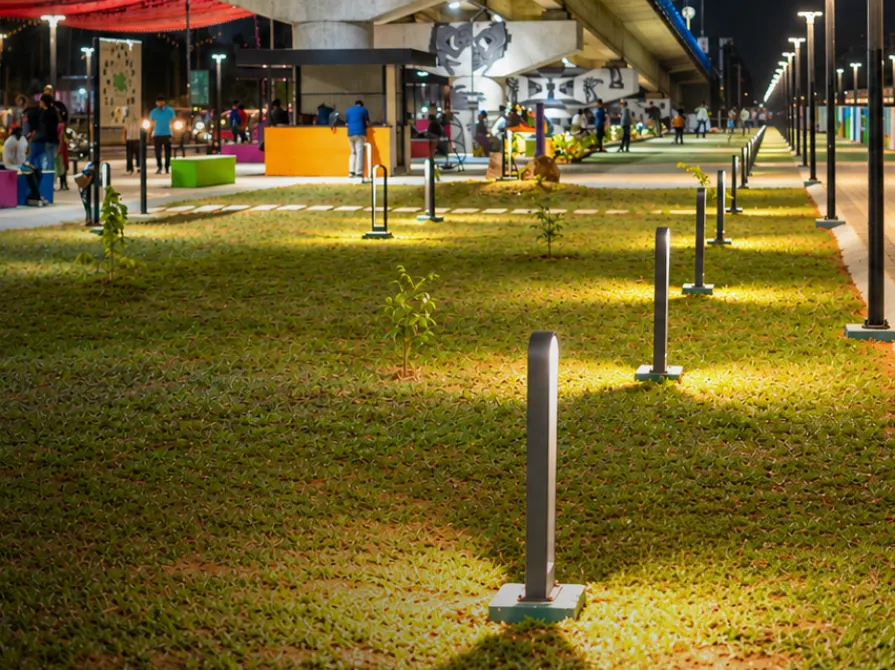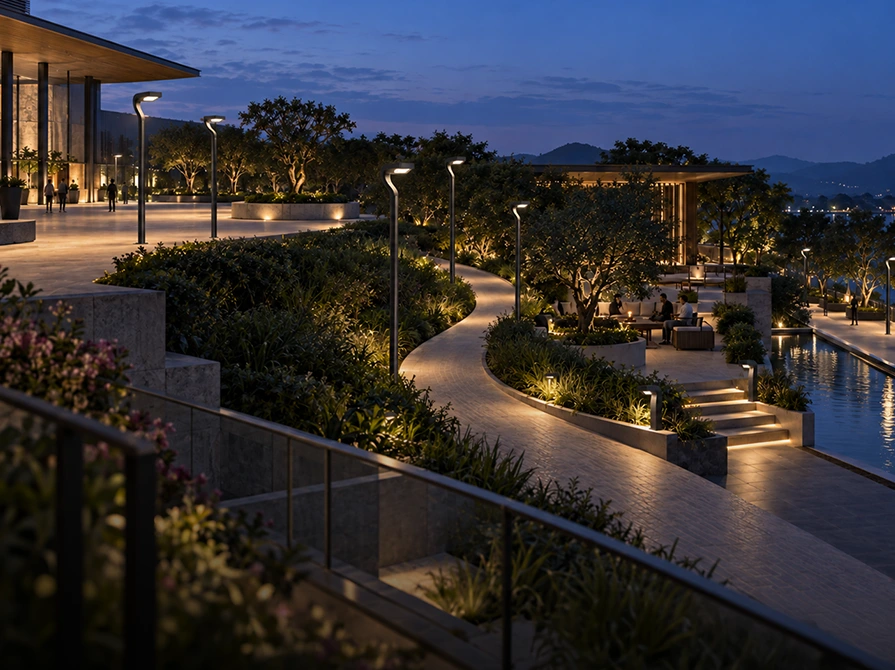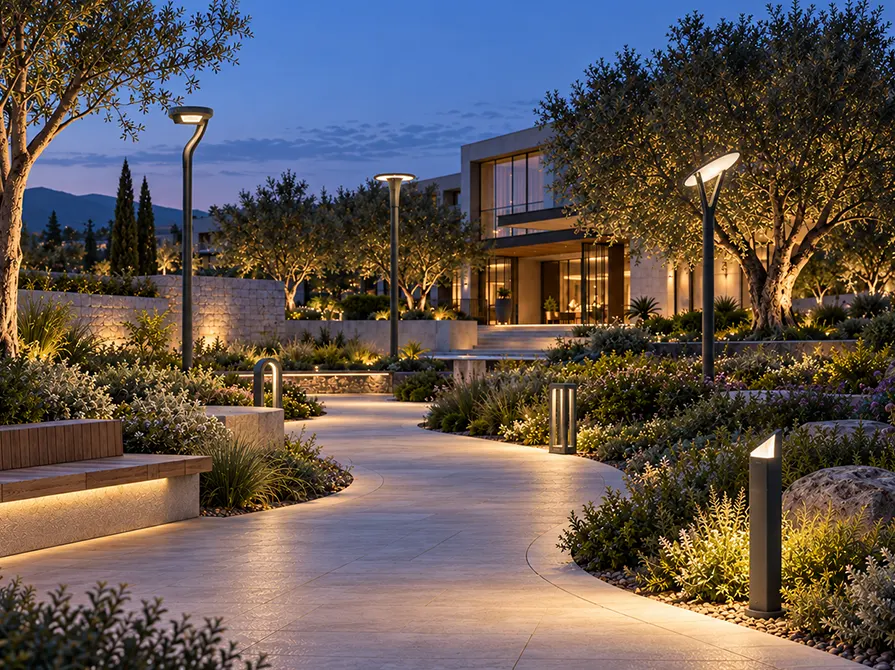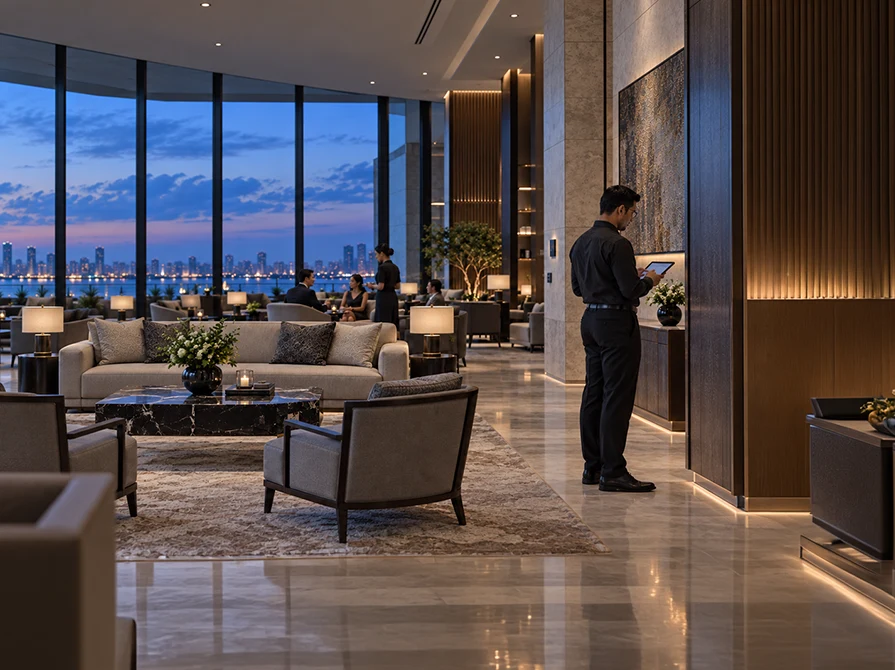


A well-designed commercial landscape has more than just thoughtful architecture and lush greenery. It comes alive after sunset through strategic landscape lighting. From luxury hotels and corporate campuses to gated communities and public parks, outdoor lighting enhances safety, improves navigation, highlights architectural features, and creates memorable nighttime experiences.
As commercial developments across India increasingly invest in attractive outdoor environments, selecting the right lighting solutions has become an important part of project planning. However, with multiple fixture types available, choosing the right combination can be challenging.
This comprehensive guide explains the different types of landscape lighting, where each is used, key technical considerations, and how architects, facility managers, lighting consultants, and project developers can select the right solutions for commercial properties in India.
Landscape lighting is the strategic use of outdoor lighting fixtures to illuminate gardens, pathways, landscapes, architectural elements, water features, driveways, and open spaces. It combines functional illumination for safety and navigation with decorative lighting that enhances the visual appeal of outdoor environments.
Path lights are low-height fixtures designed to illuminate pedestrian routes while creating a welcoming outdoor environment. They distribute light downward or outward to provide comfortable visibility without causing glare, making them ideal for guests, residents, and visitors.
These fixtures are commonly installed along:
Instead of flooding the entire area with bright light, path lights create evenly spaced pools of illumination that naturally guide movement. Warm white lighting (3000K) creates an inviting atmosphere, while neutral white (4000K) may be preferred for institutional settings.
Bollard lights are vertical, post-mounted fixtures that provide both functional and decorative lighting. Taller than path lights, they offer wider light distribution and better visibility across larger outdoor areas.
They're widely used in:
Bollards help define circulation routes while adding a premium architectural appearance to the landscape. Modern LED bollards are available in shielded designs that minimise glare while directing light precisely where needed. Because they remain exposed throughout the year, powder-coated aluminium bodies with corrosion-resistant finishes are preferred for Indian weather conditions.
Flood lights provide broad, high-output illumination over large outdoor areas. Unlike accent lighting, flood lights prioritise visibility, security, and architectural coverage.
Common applications include:
Modern LED floodlights are available with narrow, medium, and wide beam distributions depending on the required lighting effect. Smart controls, motion sensors, and programmable dimming can significantly reduce energy consumption while maintaining security.
Spotlights create focused beams of light that highlight specific landscape elements. Rather than illuminating entire spaces, they direct attention toward carefully selected features.
Spotlights are commonly used for:
Adjustable mounting brackets allow precise aiming, while different beam angles create either dramatic emphasis or softer illumination. Warm white lighting enhances natural materials like stone and wood, while neutral white can better highlight modern architectural finishes.
In-ground lights, also called well lights, are recessed fixtures installed flush with the ground. Because they remain almost invisible during the day, they offer one of the cleanest architectural lighting solutions.
They're ideal for:
Since the fixtures are recessed, they minimise visual clutter while producing dramatic vertical lighting effects. Commercial installations usually range from 6W to 30W, depending on mounting depth and beam spread.
Step lights improve safety by illuminating changes in elevation while adding architectural sophistication.
These fixtures are recessed into:
Rather than producing excessive brightness, step lights provide gentle illumination that clearly defines each step. Hotels, resorts, commercial office campuses, and public parks frequently incorporate step lighting to improve accessibility while maintaining visual comfort.
Underwater lights are specially engineered for submerged applications, creating dramatic reflections and highlighting moving water.
They are commonly installed in:
Besides improving aesthetics, underwater lighting also enhances safety around aquatic areas during evening hours. Marine-grade stainless steel construction and high-performance sealing systems are essential for long-term durability.
String and festoon lighting create warm, decorative ambience rather than functional illumination.
Popular applications include:
These suspended lights instantly make outdoor environments feel inviting and comfortable while supporting evening dining and social gatherings. When installed correctly, decorative lighting becomes an integral part of hospitality design without overwhelming the surrounding landscape.
Different commercial properties have unique lighting priorities, making fixture selection highly application-specific.
Lighting for hospitality sector requires layered options that balance aesthetics with guest comfort. Path lights and bollards improve navigation, spotlights showcase signature landscaping, underwater lights enhance pools and fountains, while decorative festoon lighting creates inviting outdoor dining experiences. Warm white lighting (3000K) is generally preferred to create a luxurious atmosphere.
Corporate environments prioritise safety, professionalism, and energy efficiency. Bollards define pedestrian movement, flood lights improve security around parking and building perimeters, and in-ground uplights emphasise architectural façades. Smart lighting controls further optimise operating costs while supporting sustainability goals.
Residential communities require lighting that improves everyday safety without creating excessive brightness. Path lights, bollards, step lights, and selective flood lighting help residents move comfortably while enhancing security around entrances, gardens, clubhouses, and recreational areas. Durable, low-maintenance LED fixtures reduce long-term maintenance costs for facility management teams.
Public parks, promenades, plazas, waterfronts, and Smart City developments require robust lighting solutions capable of operating reliably in demanding environments. High-performance bollards, flood lights, pathway lighting, and architectural lighting improve accessibility, public safety, and nighttime usability while supporting urban placemaking initiatives. Smart controls, adaptive dimming, and energy-efficient LEDs further contribute to sustainable public infrastructure.
When evaluating commercial landscape lighting, performance specifications are just as important as aesthetics.
| Feature | LED Landscape Lighting | Traditional Lighting |
|---|---|---|
| Energy Consumption | Up to 70–80% lower | Higher electricity usage |
| Lifespan | 50,000–100,000 hours | 2,000 –10,000 hours |
| Maintenance | Minimal | Frequent lamp replacement |
| Upfront Cost | Higher initial investment | Lower initial cost |
| Heat Generation | Very low | High |
| Lighting Control | Easy integration with dimming and smart controls | Limited |
| Long-term ROI | Excellent due to lower energy and maintenance costs | Higher lifetime operating costs |
What are the main types of landscape lighting?
The primary types include path lights, bollard lights, flood lights, spotlights, in-ground lights, step lights, underwater lights, and decorative string or festoon lighting.
What is the difference between path lights and bollard lights?
Path lights are shorter fixtures designed primarily for pedestrian walkways, while bollard lights are taller and illuminate larger areas such as driveways, plazas, and wider pathways.
Which type of landscape lighting is best for hotels?
Hotels typically use a layered combination of path lights, bollards, spotlights, underwater lights, architectural lighting, and decorative string lighting to balance functionality with ambience.
What IP rating is required for outdoor lighting in India?
For most outdoor installations, IP65 is recommended. Coastal projects benefit from IP66, while recessed and underwater fixtures should use IP67 or IP68, depending on the application.
How long do LED landscape lights last?
High-quality commercial LED landscape lighting typically lasts between 50,000 and 100,000 operating hours, depending on the fixture design, operating conditions, and maintenance practices.
The right combination of landscape lighting enhances safety, elevates architectural appeal, and improves the overall experience of commercial outdoor spaces. Whether you're designing a luxury resort, a corporate campus, a gated community, or a public infrastructure project, choosing durable, energy-efficient lighting solutions is essential for long-term performance.
Explore Wipro Lighting's outdoor lighting portfolio, including bollards, flood lights, architectural lighting, and other outdoor luminaires, to find solutions engineered for Indian conditions.
Planning a new project? Talk to a Wipro Lighting consultant today and create outdoor spaces that perform beautifully, day after day, year after year.